
Anton Long as Hyperstition, Part I of II
Identity Dissolution, Inhuman Agency, and Occult Persona-Engineering in the Order of Nine Angles


Necessary Preface
This two-part article offers a provocation. It proposes that “Anton Long” should not be approached as a biographical mystery to be solved, but as a functional operator within the Order of Nine Angles’ esoteric system. The point is not to identify who wrote the foundational texts, but to analyse what the persona does: how it structures myth, shapes practice and generates effects that exceed the framework of an individual human author.
The ONA’s primary writings articulate a view of tradition not rooted in personality but in an ongoing current of insight. In Hostia I, “The Tradition of the Sinister Way” presents the initiate as:
“A Satanist is an individual explorer – following in the footsteps of others (and perhaps using their guidebooks) but always seeking further horizons, daring to defy convention (in ideas as well as in morals and attitude) yet part of an evolutionary succession enabling what is experienced to be understood and become beneficial.”
This framing emphasises the continuity of a lineage rather than the centrality of any one figure. The same text stresses that:
“For this reason, a genuine Satanist understands tradition as important and necessary – the culmination of centuries of insight and experience, a useful guide which enables further progress and exploration…”
Together, these passages articulate a conception of identity that is collective, processual, and oriented toward transformation. “Anton Long,” in this view, is less an origin point than a node in that evolutionary succession—a mask worn by a tradition rather than the other way around.
Crucially, the ONA maintains that tradition itself is not immutable. As Hostia also states:
“This tradition is not sacrosanct – but it does possess a validity until the individual reaches the stage where the unique genius within each individual has been brought to fruition…”
This conditional, developmental understanding of tradition underscores the idea that identities—including authorship—operate within a system designed for continual re-expression.
The Sinister Tradition makes this metaphysics explicit. Discussing willed acts and the presencing of essence, it declares:
“And each new willed act is another re-expression of the essence, another re-definition of cosmic meaning – another dis-covering of the potency of life presenced in each one of us.”
Here, agency is distributed, emergent, and embedded within a current that manifests through individuals rather than originating from them. Within such a framework, a persona like “Anton Long” may not be an empirical author but an esoteric device—a point of transmission through which the Sinister Tradition articulates itself.
It is in this spirit that the present writing proceeds: not to uncover the biographical individual behind the name, but to explore how the persona functions as an instrument of myth, doctrine, and transformation.
Take this as a iocus severus: a serious jest, a provocation, or something in between.
Introduction: The Problem of “Anton Long”
The figure known as “Anton Long” has long occupied a central yet paradoxical place in scholarship on the Order of Nine Angles. While public and academic discussions frequently attempt to determine whether Long is a single biographical individual, a pseudonym for a known extremist, or a composite identity shared among initiates, the ONA’s own texts complicate the very premise of such inquiries. The organisation repeatedly frames authorship not as a reflection of personal biography but as an expression of a deeper, transpersonal current — what it calls the “Sinister Tradition.”
This emphasis appears throughout the corpus. In The Satanic Letters of Stephen Brown, Long directly states that no individual occupies an official leadership role, writing that “no one has ever claimed to be ‘Head’ of the ONA: no such position exists.”
The absence of a personal centre is further reinforced in another letter, where Long characterises both his teachings and his identity as inherently provisional: “I claim no authority, and my creations, profuse as they are, will in the end be accepted or rejected based on whether they work. […] They — like the individual I am at the moment — are only a stage, toward something else.”
These passages destabilise conventional assumptions about authorship. Rather than presenting himself as a founder whose identity anchors the tradition, Long insists that both the writings and the writer are temporary configurations within a larger esoteric process. The ONA frames individual identity as fluid, mutable, and subordinate to the demands of its “acausal” aims. This view is consistent with the organisation’s emphasis on roles, masks, and initiatory transformation. As one letter puts it succinctly: “Once again, a ‘role’ is only a role, played out in the quest for understanding.”
Such statements create an interpretive challenge. If the persona “Anton Long” is deliberately constructed as a mask, then treating it as a stable authorial figure risks misunderstanding how the ONA intends its teachings to function. The organisation repeatedly suggests that its authority derives not from an individual but from a transhistorical “sinister tradition,” described in Hostia I as a path of inner development whose goal is the creation of “a new individual.”
This tradition is positioned as both ancient and adaptive. The Satanic Letters describes its publication during the 1980s as a deliberate aeonic tactic: “a decision was taken to gradually make available the methods, philosophy and teachings of the Order — this decision being based on Aeonic or sinister strategy.”
Long repeatedly indicates that earlier secrecy gave way to strategic dissemination intended to reshape contemporary understandings of Satanism and the occult.
These remarks suggest that “Anton Long” is not merely an author but an operational device — a persona structured to act within the ONA’s initiatory and political framework. Treating Long as a hyperstitional figure clarifies how the ONA simultaneously uses and undermines the conventions of authorship: the persona serves as a conduit for the sinister tradition while refusing to anchor itself in any verifiable identity. The ONA’s writings themselves support this model, portraying the individual author as transient, the tradition as enduring, and the persona as a strategic mask used “in the quest for understanding.”
The purpose of this article is therefore not to resolve the biographical question, but to analyse the function of the persona “Anton Long” within the ONA’s system. By reading Long as a hyperstitional construct — a fiction engineered to produce real effects — we can better understand the mechanisms through which the ONA disseminates doctrine, shapes identity, and embeds itself within broader cultural and political currents.
Hyperstition and the Ontology of Fiction
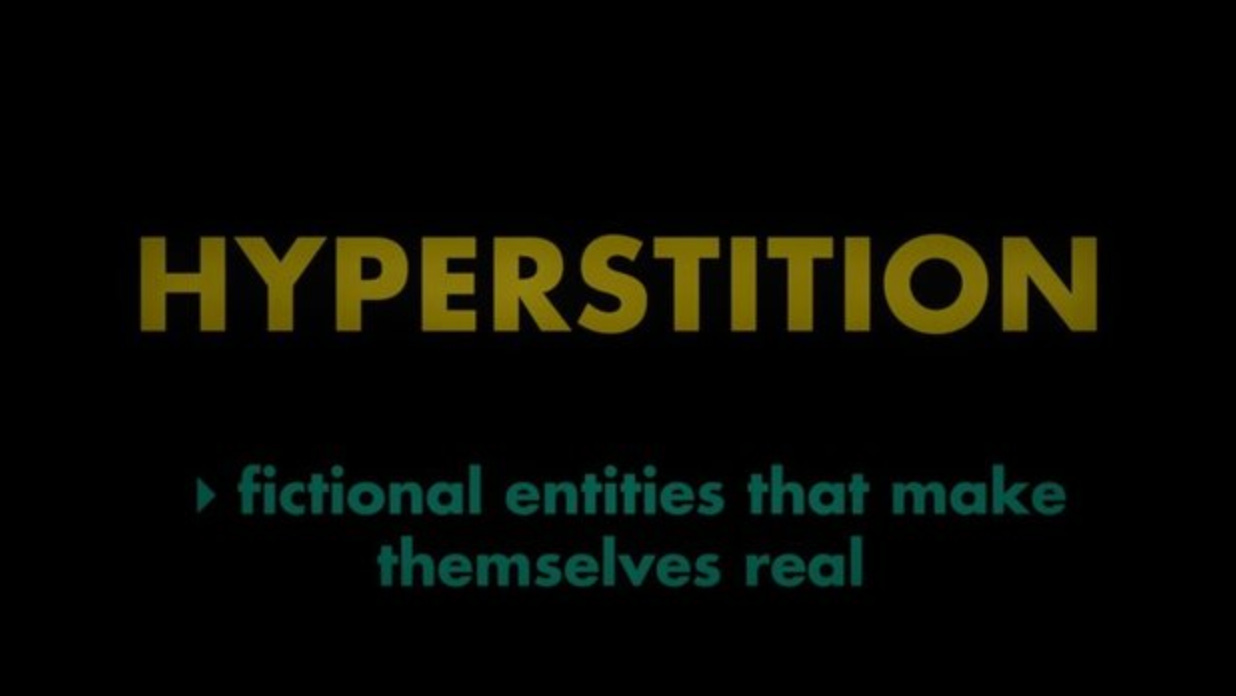
The concept of hyperstition provides a valuable interpretive frame for understanding how the ONA constructs, deploys, and sustains the persona “Anton Long.” Coined by the Cybernetic Culture Research Unit (CCRU) during the 1990s, hyperstition describes narratives that bring themselves into reality through their effects. These are not fictions in the conventional literary sense, but feedback-driven mechanisms: stories, identities, or symbols that act as catalysts, shaping behaviour, culture, and expectation in ways that ultimately materialise the conditions they predict.
Hyperstition collapses the conventional divide between fiction and reality. It assumes that specific ideas, when circulated within receptive structures, acquire agency and produce material consequences; the operational truth of a hyperstition lies not in its historical accuracy but in its capacity to generate effects. The ONA’s textual universe resonates strongly with this model. Its claims about acausal energies, sinister lineages, and numinous presences do not depend on empirical verification, but on their function within ritual practice, personal transformation, and ideological commitment.
This framework becomes particularly useful for interpreting the figure of Anton Long. Instead of treating the persona as a fixed authorial point, hyperstition allows us to approach Long as an identity produced through repetition, circulation, and enactment. The persona is not asserted but emerges from the cumulative weight of texts attributed to it, their influence on adherents, and the social and ritual practices they inspire. The more the name is used, cited, contested, and mythologised, the more real it becomes within the system that sustains it.
A hyperstitional identity differs from a pseudonym. A pseudonym masks an author; a hyperstitional persona magnifies a narrative process. The ONA encourages this distinction through its own strategies of anonymity and multiplicity. The lack of a definitive biographical anchor for Anton Long is not evasive, since it creates a vacuum into which narrative energy flows. Each textual appearance of the persona contributes incrementally to its density and coherence, even if the human origin behind any given document remains unclear. Hyperstition thrives in such ambiguity.
The ONA’s acausal ontology reinforces this dynamic. By positing the existence of non-linear, transpersonal forces that intersect with human consciousness through nexions, the ONA builds an interpretive structure in which identity is already non-unitary. If individuals, texts, or places can function as nexions for acausal energies, then a persona like Anton Long can be understood as one such point of intersection. Within this framework, authorship becomes a vehicle for transmitting a current rather than for expressing a personal perspective. The persona is not the origin but the conduit.
Hyperstition also illuminates the ONA’s emphasis on practical action. The tradition repeatedly insists that transformation occurs through lived experience rather than theory alone. A hyperstitional persona gains reality through enactment; it becomes real by being used. Every time an initiate cites Anton Long, follows a ritual attributed to him, or engages with a text in which the persona speaks, the identity is re-instantiated. Its authority is generated not by the historical existence of a single author but by the cumulative effects of these engagements across time.
Seen through this lens, the debate over whether Anton Long is one single person, several, or none becomes secondary. What matters is how the persona functions within the system of practices and beliefs that constitute the ONA. Hyperstition highlights how the ONA leverages ambiguity to produce an identity that is durable precisely because it is not tied to a single human figure. The persona persists because it is both contested and indispensable; because it is continually re-enacted in texts, rituals, and the narratives of adherents.
In this sense, the ONA’s hyperstitional dynamics prefigure their own interpretive consequences. The more scholars, practitioners, and critics attempt to determine who Anton Long is, the more they contribute to the persona’s discursive reality. Hyperstition operates through attention — whether affirming or adversarial. The figure becomes a memetic attractor, drawing interpretive energy toward itself and sustaining its existence through every act of engagement. The hyperstitional persona thrives not despite controversy but because of it.

The ONA’s Acausal Ontology and the Destabilisation of Identity
The Order of Nine Angles grounds its metaphysics in a dual ontology that distinguishes between the causal world of physical existence and the acausal realm of nonlinear temporality, multidimensional space, and numinous energy. This distinction is not merely cosmological; it is the basis for the ONA’s model of selfhood, transformation, and authorship. By reframing the human being as a nexion—an interface between two modes of being—the ONA dissolves the foundations upon which conventional identity and biography rest.
The most explicit definition appears in The Sinister Tradition, which states:
“The causal is the ‘physical’ universe described by three spatial dimensions and linear time. The acausal is the universe described by an unspecified number of spatial dimensions and by non-linear (or acausal) time.”
The causal world is thus the domain of ordinary subjectivity, memory, personal history, and linear narrative. The acausal, by contrast, represents a realm of potentiality, flux, and non-human agency. Its intersection with human consciousness undermines the coherence of the individual ego, introducing a mode of being that cannot be expressed through conventional, causally bound categories such as personality or authorship.
Initiatory practice within the ONA is framed precisely as the awakening of this latent acausal dimension. As Hostia explains:
“According to our tradition, we as individuals possess both causal and acausal aspects. The acausal aspect is usually latent, and initiation is the means of awakening it—of opening the way, the nexion, to the acausal.”
This awakening is not symbolic. It is described as a literal alteration of consciousness in which the practitioner becomes a site through which acausal energies flow. Such a model destabilises the idea of a stable subject. Identity becomes porous, not because of psychological fragmentation, but because the self is reconceived as a conduit for transpersonal, nonlinear forces.
The ONA makes this point unequivocally in its assertion that all living beings are nexions:
“All causal living beings… are all connexions – nexions – between the causal and the acausal continuums.”
If every sentient being is already a nexion, then the distinction between the “self” and the currents it expresses collapses. What we experience as personal identity is only the causal side of a deeper ontological structure. Initiation is not the acquisition of a new persona but the disclosure of the self’s preexisting acausal dimension.
This metaphysics has direct implications for authorship. If individuals operate as nexions, then the texts attributed to “Anton Long” need not originate from a single human author. They can be understood as manifestations of a current expressing itself through various nexions over time. This model aligns with the ONA’s explicit rejection of personal authority and its insistence that its tradition flows through those capable of accessing the acausal.
By grounding its philosophy in this dual ontology, the ONA undermines the very premises upon which biographical identity is constructed. The self becomes a site of passage rather than a stable origin; the persona becomes a function rather than a signature. Within this system, “Anton Long” is not a person but a structural position—an interface through which the acausal manifests, and around which a tradition crystallises.
The destabilisation of identity is therefore not a byproduct of secrecy or pseudonymity but an expression of the ONA’s ontological commitments. The acausal cannot be contained within the boundaries of a singular ego, and neither can the persona that speaks on its behalf.
Scholarly Lenses: Narrative Reflexivity and Occulture
A growing body of scholarship on contemporary esotericism provides valuable tools for understanding how the ONA constructs and deploys the persona of “Anton Long.” Rather than treating the group’s texts as transparent authorial statements, these approaches highlight how narrative reflexivity, self-mythologization, and deliberate ambiguity function as mechanisms of authority. When applied to the ONA, this scholarship clarifies how the persona operates as a hyperstitional device: an identity sustained not through biography but through narrative strategies embedded in the texts themselves.
Jesper Aagaard Petersen and James R. Lewis both observe that modern Satanic groups often cultivate a conscious narrative self-awareness, using fiction, symbolism, and performative identity-work in ways that blur the lines between myth, ritual, and lived practice. Their work suggests that Satanic texts often present themselves as both myth and manual, inviting readers to engage with narratives that are not meant to be judged solely on empirical grounds. The ONA pushes this tendency further. Its corpus not only incorporates mythic genealogies and esoteric lineages but also uses these materials reflexively, acknowledging their constructed nature while insisting on their operational efficacy. This dual gesture—revealing the artifice while intensifying its power—is characteristic of hyperstitional systems.
Kennet Granholm’s concept of occulture provides another valuable lens. Occulture refers to the diffuse circulation of esoteric symbols, ideas, and aesthetics across countercultural and mainstream spaces. Within this environment, the distinction between fiction and belief becomes secondary to the material's affective and symbolic potency. The ONA’s writings operate precisely in this occultural field. By mixing lineages, mythic histories, sinister archetypes, and radical politics, the group produces a narrative ecology where ambiguity is not a weakness but a resource. The persona “Anton Long” benefits directly from this environment: it thrives because occulture rewards identities that are mysterious, transgressive, and resistant to reduction.
The most incisive analysis comes from Jacob Senholt, whose work on the ONA’s identity politics foregrounds the group’s deliberate use of masks, pseudonyms, and shifting authorial voices. Senholt argues that the ONA constructs what he calls an underdetermined subject position. This identity is designed to remain unresolved, open-ended, and capable of being inhabited by multiple individuals across time. This fluidity does not undermine the ONA’s authority; it constitutes it. By refusing to anchor its teachings in a single empirical figure, the ONA creates a persona that functions as a narrative attractor, drawing adherents into a web of myth, ritual, and ideological experimentation.
From the perspective of hyperstition, this strategy is entirely coherent. A hyperstitional entity gains power not through factual stability but through interpretive activity. The more the persona is discussed, contested, imitated, or speculated about, the more real it becomes within the discursive system that sustains it. The ambiguity surrounding “Anton Long” is therefore not a flaw in the ONA’s structure; it is the mechanism through which the persona’s authority is generated. Ambiguity invites projection, and projection amplifies myth.
This dynamic also clarifies why attempts to unmask the empirical author behind the persona often fail to reduce its influence. Even when scholars or journalists propose specific individuals as candidates, the narrative effect remains the same: the persona becomes an object of attention, analysis, and debate. Each new theory reinforces the hyperstitional circuit. The ONA’s narrative reflexivity ensures that every attempt to stabilise Anton Long's identity is reincorporated into the mythos as further evidence of its potency.
Through the lenses of narrative reflexivity and occulture, then, the persona “Anton Long” emerges as a deliberately unstable figure—a mask designed to be worn, contested, and reactivated. Rather than grounding the ONA in biography, the persona opens a space for mythic elaboration, esoteric experimentation, and the circulation of ideas across cultural and ideological boundaries. It is precisely this indeterminacy that enables the persona to function as a hyperstitional device.
If ‘Anton Long’ is not a person but a device, Part II will examine how that device actually works.
Another perspicacious article. The real-world identity of "Anton Long" is not important in aeonic terms - it is what he/she/they expressed/developed between 1976-2012 re an Occult tradition even though IMO it had several inherent flaws.
A few thoughts, and a few issues I see.
1. Hyperstitions, as you're describing them, seem to require ambiguity. I don't think this is so much ambiguity as it is plausible deniability. Speculation seems to always fall on agreeing or disagreeing with AL=DM, and maybe some of his followers. Given Myatt's past in radical politics, if he was AL, he would be all too familiar with legal crackdowns, only amplified with Copeland's nail bombings. Hence then, perhaps why speculation has always included David Myatt, and why many of the supposed "Inner O9A" are so desperate to propogate Myatt at all costs.
2. Speculation not reducing authority isn't strictly for the reasons you might speculate. Because of far-right elements in O9A texts/culture, and many O9A adherents being themselves far-right, many in the O9A will naturally sympathise with Myatt's story, especially given his extremist past. If he were, say, speculated to be Mary Daly, that point might hold more.
3. There's somewhat of a complication to speak of "primary writings" and then to quote Anton Long denying his own authority. I have been working on a document on this for a while, I can perhaps send it to you, but there's a fundamental contradiction between 'my words are just suggestions' and 'there exist primary sources/writings which have any more weight than other writings on the O9A'. The Inner O9A themselves have, in the past, rejected the existence of primary sources.
4. The acausal elements of the individual seem, to me, more pertinent to the ego death following the Rite of the Abyss than to do with anything re: authorship. See for example, Crowley's crossing of the abyss, which follows a similar psychological process of destroying the individual ego.